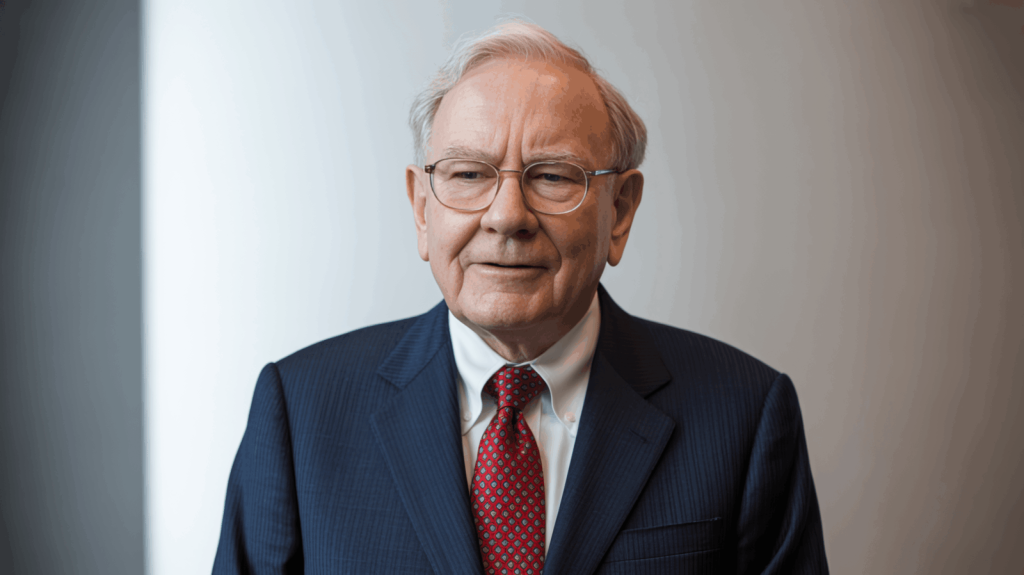

Warren Buffett has built one of the greatest investment records in history, but his philosophy is often defined more by what he refuses to buy than by what he owns. His strategy centers on a simple idea: protect your capital first, then let great businesses compound your wealth over decades.
Across his Berkshire Hathaway shareholder letters and decades of public commentary, Buffett has been remarkably consistent about the categories of investments that destroy wealth. The following five categories make up his personal “no-go” zone, and understanding why he avoids them can save you from costly mistakes.
1. Businesses You Don’t Understand
“Investment must be rational; if you can’t understand it, you can’t be rational about it.” – Warren Buffett.
Warren Buffett built this principle into the foundation of his entire approach, calling it staying within your “circle of competence.” It isn’t about how smart you are or how big your circle is, but about knowing exactly where its edges sit.
Buffett famously sat out the late 1990s dot-com boom because he couldn’t reasonably project how those companies would generate consistent earnings a decade into the future. Critics mocked him as out of touch, but the crash that followed validated his discipline.
The logic is straightforward. If you can’t predict what a company’s economics will look like in 10 or 20 years, you aren’t investing at all. You’re speculating on price movements and hoping someone else pays more later.
This principle applies just as much to ordinary investors as it does to Buffett. Buying a stock simply because it’s trending or because a friend mentioned it puts you in a position where you can’t react rationally when the price drops.
2. Cigar Butt Investments and Poor Businesses
“It’s far better to buy a wonderful company at a fair price than a fair company at a wonderful price.” – Warren Buffett.
Warren Buffett learned this lesson the hard way during his early career, when he practiced what he called “cigar butt” investing. The idea was to buy struggling companies at deep discounts to extract one last puff of value before they burned out.
Charlie Munger pushed him to abandon this approach, and it transformed Berkshire Hathaway. The shift from buying cheap, mediocre businesses to paying fair prices for excellent ones became the engine behind decades of compounding returns.
“Time is the friend of the wonderful business and the enemy of the mediocre one,” Buffett said. A great company keeps producing value year after year, while a struggling one consumes capital to stay alive.
Practical investors should avoid businesses with low returns on equity, weak competitive positions, or recurring capital injections. A cheap stock attached to a deteriorating business is rarely the bargain it appears to be.
3. Gold and Non-Productive Assets
“It gets dug out of the ground in Africa, or someplace. Then we melt it down, dig another hole, bury it again and pay people to stand around guarding it. It has no utility.” – Warren Buffett.
Warren Buffett has long argued that gold fails the most basic test of an investment because it doesn’t produce anything.
His comparison is memorable. Buffett said, “If you owned all the gold in the world, you’d have a shiny cube sitting in a vault. If you owned all the farmland in America instead, you’d have a massive engine producing food, income, and wealth every single year.”
The problem with gold and similar non-productive assets is that their value depends entirely on someone else being willing to pay more for them later. There’s no underlying business generating cash, no dividend stream, and no compounding effect from retained earnings.
This doesn’t mean gold has no role for some investors as a hedge or store of value. It does mean that, as a long-term wealth-building vehicle, productive assets like businesses and farmland have historically delivered far better results.
4. Bitcoin and Cryptocurrencies
“[Bitcoin] is probably rat poison squared.” – Warren Buffett.
Warren Buffett’s view on Bitcoin follows directly from his view on gold, but with even sharper criticism. He classifies cryptocurrencies as non-productive assets that don’t generate earnings, dividends, or any tangible output.
Buffett has said that even if someone offered him all the Bitcoin in the world for a tiny fraction of its market price, he wouldn’t take it because he wouldn’t know what to do with it. The asset produces nothing, so its only function is to be sold to someone else at a higher price.
He views the entire space as a speculative bubble built on enthusiasm rather than fundamentals. The price movements may be dramatic, but they reflect shifting sentiment rather than improving business performance.
For investors focused on building durable wealth, the absence of cash flow is the central problem. A productive business can survive a market crash because it keeps generating earnings, while a purely speculative asset has nothing to fall back on when the mood shifts.
5. New IPOs and Hot Public Offerings
“You don’t have to really worry about what’s really going on in IPOs. People win lotteries every day, but there’s no reason to let that affect [your investing strategy] at all. You have to find what makes sense and follow your own course.” – Warren Buffett.
Warren Buffett has consistently warned investors to stay away from the hype surrounding new public offerings. The timing of an IPO is engineered to benefit the seller, not the buyer.
When a company goes public, the owners and bankers choose the moment when the market is most enthusiastic and willing to pay premium prices. You’re essentially buying from someone who knows the business better than anyone else and has decided this is the optimal time to sell.
That dynamic rarely produces bargains. The excitement surrounding a hot IPO almost guarantees that you’re paying a price that already reflects the most optimistic possible scenario.
Buffett’s preferred approach is to wait. Established companies with long track records, transparent financials, and proven management teams give you something an IPO can’t, which is years of evidence about how the business actually performs through different economic conditions.
Conclusion
Buffett’s avoidance list reveals something important about how great investors think. The biggest gains often come not from picking winners but from refusing to participate in losing categories.
Each of these five areas shares a common flaw: the absence of predictable, productive economics. By staying away from businesses he can’t understand, mediocre companies, non-productive assets, speculative tokens, and hype-driven IPOs, Buffett protects his capital and lets his best decisions compound undisturbed.
That patient discipline, more than any single brilliant pick, explains why his record has stood the test of time.
PakarPBN
A Private Blog Network (PBN) is a collection of websites that are controlled by a single individual or organization and used primarily to build backlinks to a “money site” in order to influence its ranking in search engines such as Google. The core idea behind a PBN is based on the importance of backlinks in Google’s ranking algorithm. Since Google views backlinks as signals of authority and trust, some website owners attempt to artificially create these signals through a controlled network of sites.
In a typical PBN setup, the owner acquires expired or aged domains that already have existing authority, backlinks, and history. These domains are rebuilt with new content and hosted separately, often using different IP addresses, hosting providers, themes, and ownership details to make them appear unrelated. Within the content published on these sites, links are strategically placed that point to the main website the owner wants to rank higher. By doing this, the owner attempts to pass link equity (also known as “link juice”) from the PBN sites to the target website.
The purpose of a PBN is to give the impression that the target website is naturally earning links from multiple independent sources. If done effectively, this can temporarily improve keyword rankings, increase organic visibility, and drive more traffic from search results.